
Boulder Obituary Records
Searching for Boulder obituary records connects you to rich local history. Nestled at the foothills of the Rockies, Boulder has kept detailed death records for over a century. The city sits entirely within Boulder County. This makes finding vital records straightforward. Boulder Public Library and county offices work together to preserve these documents. Learn how to access Boulder death certificates and obituary archives through local resources.
Boulder City and County Resources
The City of Boulder works closely with county offices to serve residents. While the city does not issue death certificates directly, they provide connections to Boulder County Public Health. This department handles all vital records for Boulder residents. The office sits at 3450 Broadway in Boulder. You can reach them at 303-441-1100 for questions about Boulder death records.
Boulder has a long tradition of record keeping. Founded in 1859, the city grew quickly during the mining boom. Early settlers created families that still live here today. Boulder obituary records document these family histories. Death certificates trace lineages back to pioneer days. These vital records help preserve Boulder heritage for future generations.
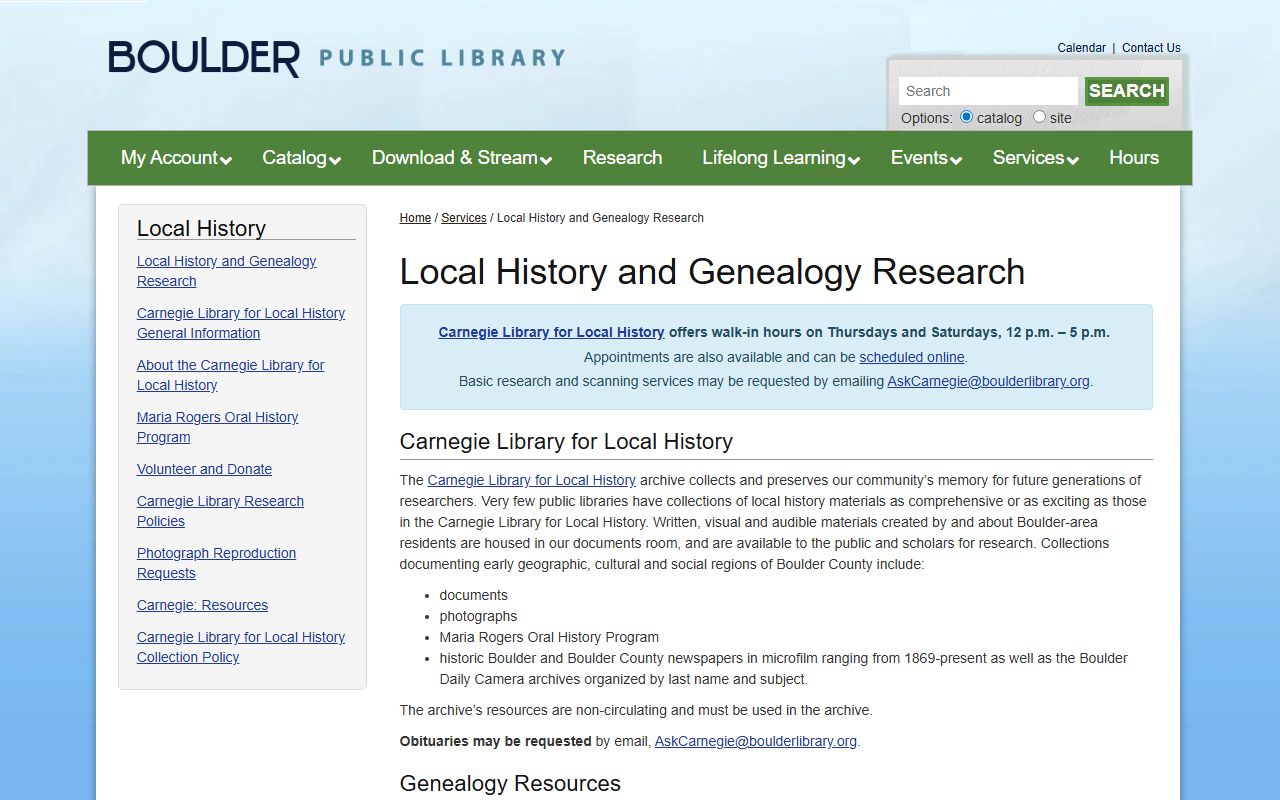
The Carnegie Branch Library for Local History stands as a key resource. Located at 1125 Pine Street, this branch specializes in Boulder genealogy. They hold newspapers, photographs, and family histories. Staff can guide you to Boulder obituary archives. Call 303-441-3100 for research assistance.
Note: Boulder County Public Health issues death certificates for any Colorado county death, not just Boulder.
Boulder Public Library History Resources
The Boulder Public Library maintains extensive local history collections. Their Carnegie Branch focuses on Boulder genealogy research. The collection includes city directories dating back to the 1880s. Newspapers on microfilm cover Boulder history. Photographs document people and places over decades. These materials support Boulder obituary research with rich context.
Local history librarians know Boulder records well. They can suggest sources for your search. Obituary indexes may speed your research. Cemetery transcripts show burial locations. Family histories donated by residents add personal stories. All these resources help build complete pictures of Boulder ancestors. The library welcomes genealogy researchers.
University of Colorado Boulder adds academic resources. The Norlin Library holds Western Americana collections. Their archives include Boulder-area manuscripts. University publications mention community members. These resources complement public library holdings. Together they create a robust research environment for Boulder obituary records.
Where to Find Boulder Obituaries
Boulder newspapers have published obituaries for over 150 years. The Daily Camera serves as the primary local paper. Their obituary section announces recent deaths. Historical issues contain older notices. Check the newspaper's website for recent Boulder obituaries. Libraries keep archives of past issues on microfilm for research.
Cemetery records document Boulder burials. Columbia Cemetery dates to 1870. It holds many pioneer graves. Records show who is buried in each plot. Valmont Cemetery provides another historic burial ground. Contact cemetery offices for burial registers. These Boulder vital records confirm death dates and locations.
Funeral homes create service records in Boulder. These businesses maintain files on services they conduct. Records may include obituary copies. Memorial programs preserve life stories. Payment records show family connections. Contact Boulder funeral directors for access to recent records.
Church archives hold additional Boulder death records. Religious communities kept burial records before civil registration. Memorial services honor congregation members. Anniversary books profile long-time members. These sources add depth to official Boulder death certificates. Contact individual churches for access policies.
Online Resources for Boulder Death Records
The Colorado Department of Public Health and Environment provides online ordering for Boulder death certificates. Their system works through authorized third parties. GoCertificates and VitalChek process online requests. Both charge service fees beyond state costs. Expect about thirty business days for processing. Online ordering lets you obtain Boulder vital records without visiting offices.
Colorado Historic Newspapers Collection offers free access to digitized papers. This database includes historic Boulder newspapers. Search over 7.5 million pages from across Colorado. Papers span from 1859 to 2025. You might find Boulder obituaries from decades past. This free resource supports genealogy research throughout the state.
The Denver Public Library offers obituary indexes online. Their Colorado Obituary Project covers non-Denver areas. This includes Boulder obituaries from the 1970s through 1990. The Denver Obituary Project indexes Denver papers from 1913 to 2016. These indexes point you to full obituaries. Visit the library to request copies of notices.
Find A Grave lists many Boulder cemetery burials. Users contribute photos of grave markers. GPS coordinates help locate graves. Family links connect related individuals. This free database supplements official Boulder death records. It provides visual confirmation of burial sites. Genealogists worldwide use this resource for Colorado research.
Note: The Colorado State Archives holds pre-1908 death records for historical Boulder genealogy research.
Boulder Genealogy Research Resources
Boulder offers excellent resources for family historians. Start with death certificates from county health departments. These documents provide verified facts. Names, dates, and relationships appear clearly. Use these as foundation documents for your research. Build outward using other Boulder obituary records.
Census records show Boulder residents over time. Federal censuses began including Colorado in 1870. State censuses add additional snapshots. These records place families at specific addresses. They show household composition clearly. Compare census data with Boulder death certificates. This confirms family connections across decades.
City directories trace Boulder residents year by year. These list adults alphabetically by name. Addresses and occupations appear for each entry. Track individuals through multiple editions. Directories help bridge gaps between census years. They confirm where people lived in Boulder. Use them to find obituary publication dates.
Boulder genealogical societies offer research help. The Boulder Genealogical Society meets regularly. Members share research strategies. They publish materials to aid researchers. Experienced members know local records well. They can suggest sources for difficult problems. Joining connects you to Boulder research expertise.
Ordering Boulder Death Certificates
Colorado law governs access to Boulder death certificates. Under C.R.S. § 25-2-117, vital records remain confidential. This protection lasts 75 years from death. Only qualified requesters may obtain recent copies. Eligibility rules ensure privacy for Boulder families.
C.R.S. § 25-2-118 lists who may request death certificates. Immediate family members qualify first. Spouses named on records may order copies. Parents listed on certificates are eligible. Adult children must prove relationships. Siblings need documentation of shared parents. Each must show proper identification.
Legal representatives may obtain Boulder death certificates. They need court documentation showing authority. Insurance companies with valid claims may request copies. They must prove policy and beneficiary status. Government agencies can access records for official purposes. Proper work credentials are required. All requesters must demonstrate direct and tangible interest.
In-person requests often provide same-day service. Visit Boulder County Public Health at 3450 Broadway. Bring completed application forms. Show valid photo identification. Present proof of relationship to the deceased. Pay the required fee of $25 for the first copy. Additional copies cost $20 when ordered together. Staff can print certified copies while you wait for many Boulder vital records.
Mail orders work for those living outside Boulder. Download the application from CDPHE website. Complete all sections carefully. Include copy of your photo ID. Attach documents proving relationship. Mail with check or money order to the health department. Allow several weeks for processing and return mailing of Boulder death records.
Related Boulder Resources
These resources help with Boulder obituary searches. County offices issue official documents. State agencies maintain central databases. Libraries preserve historical newspapers. Together they support complete Boulder genealogy research.