
Find Colorado Obituary Records
Colorado death records and obituary archives are kept by several state agencies and local offices throughout the Centennial State. The Colorado Department of Public Health and Environment maintains official death certificates from 1900 to the present day. You can search these vital records online, by mail, or in person at the state office in Denver. Colorado newspapers, libraries, and historical societies also hold obituary archives spanning more than a century of state history. These death records help families settle estates. Genealogists use them to build family trees. Lawyers need them for legal cases. This guide shows you how to find Colorado obituary records and death certificates quickly and legally.
Colorado Death Records Quick Facts
Colorado Vital Records Office
The Colorado Department of Public Health and Environment serves as the central vault for all state death certificates. This state agency tracks every death that occurs within Colorado borders. Staff process new filings daily. They also handle requests from family members, legal reps, and genealogists who need copies of these vital records. The CDPHE maintains the master database of Colorado death records. Each certificate contains facts about the decedent. Names, dates, locations, and causes of death appear on these official papers from Colorado.
The main Colorado vital records office sits at 4300 Cherry Creek Drive South in Denver. You can reach them by phone at 303-692-2000. Hours run from 8:30 a.m. to 4:30 p.m., Monday through Friday. Walk-in visits require an advance appointment. The Colorado office no longer accepts drop-in requests for death records. This policy helps staff manage the flow of visitors. It cuts wait times for everyone seeking Colorado death certificates. Plan ahead when you need to visit in person for vital records in this state.
Under C.R.S. § 25-2-110, funeral homes in Colorado must file death certificates within 72 hours of taking custody of a body. This tight time frame keeps Colorado records current. Each certificate must list the decedent's Social Security number if one exists. Medical staff must certify the probable cause of death. These rules make Colorado death records both thorough and uniform across all 64 counties in the state. The statute ensures timely filing of vital records statewide.
Death certificates become public records after 75 years pass from the date of death. Colorado records from 1949 and earlier are open to anyone. More recent death records stay restricted to those who can prove a direct and tangible interest. This rule protects the privacy of grieving families in Colorado. It also meets the needs of historians and genealogists who study older Colorado death records. Researchers can access these historic vital records without restrictions in the state.
Note: The Colorado CDPHE office closes on state holidays, so plan your visit or call accordingly.
Colorado State Archives Death Records
The Colorado State Archives holds death records that predate state registration. Colorado did not require official death certificates until around 1908. Records from before that time are spotty. The Archives has gathered what exists from county clerks, coroners, and hospitals across Colorado. Their collection fills gaps for family historians who trace ancestors in the early days of Colorado statehood. These historic death records come in many forms. Some are handwritten ledgers. Others are typed registers from Colorado counties.
Visit the Colorado State Archives at 1313 Sherman Street, Room 1B-20, in Denver. Staff can help you search their databases. You can also use their online archives search from home in Colorado. The site holds indexes for Denver County deaths from 1905 to 1909. Kit Carson County deaths from 1893 to 1907 are also searchable. These indexes point you to death records that may not exist anywhere else in Colorado. Early Colorado vital records are fragile. The Archives works to preserve these documents for future generations of researchers.
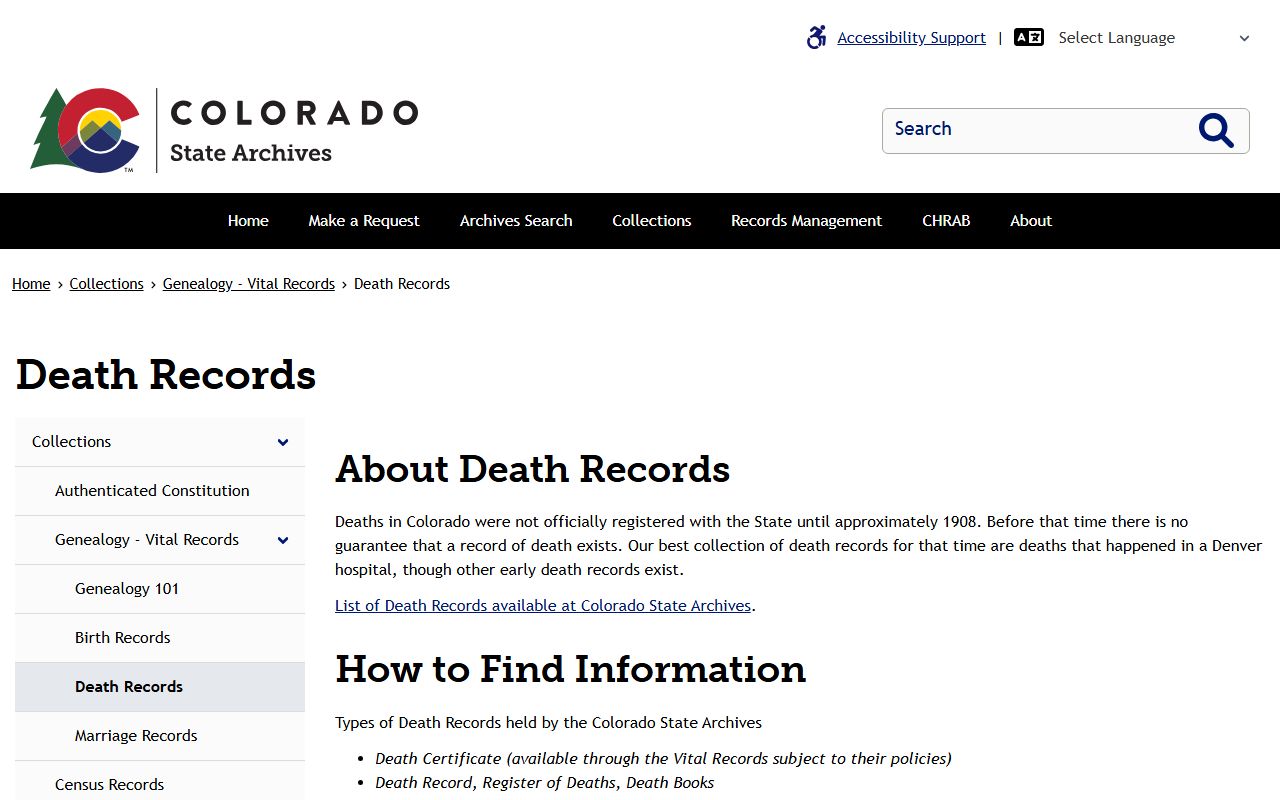
The Colorado Archives holds many types of early death documents. You may find burial permits, burial applications, or burial records. Some Colorado counties kept registers of deaths in bound books. Coroner's accounts and inquests offer details on unusual deaths in the state. These sources often provide context that official death certificates lack. For historical research in Colorado, these alternate vital records prove invaluable. They tell stories that formal papers miss about Colorado ancestors.
Probate records offer another path for Colorado researchers. When someone died in Colorado, their estate often went through probate court. These case files may list heirs, property, and death dates. The Colorado State Archives keeps many of these old court records. They can serve as proof of death when no vital record exists from that era. Lawyers and genealogists alike use these Colorado archives resources. The death records here complement official state vital records.
Death Certificate Fees and Ordering Options
As of January 1, 2026, Colorado raised its fees for death certificates. The first copy now costs $25. Each extra copy in the same order costs $20. These fees apply to all requests made through Colorado state or county vital records offices. The fees fund the work of keeping and issuing these vital records across Colorado. Requesting death records requires payment upfront. Fees are not refundable even if no Colorado record is found.
You have several ways to order death certificates in Colorado. The fastest is through the state-authorized online portals. GoCertificates charges a $9 service fee on top of state costs for Colorado records. Their phone number is 800-324-6380. VitalChek adds a $7.50 surcharge. You can reach them at 866-632-2604. Both sites let you order Colorado death records from home. They ship vital records directly to your door anywhere in Colorado or beyond.
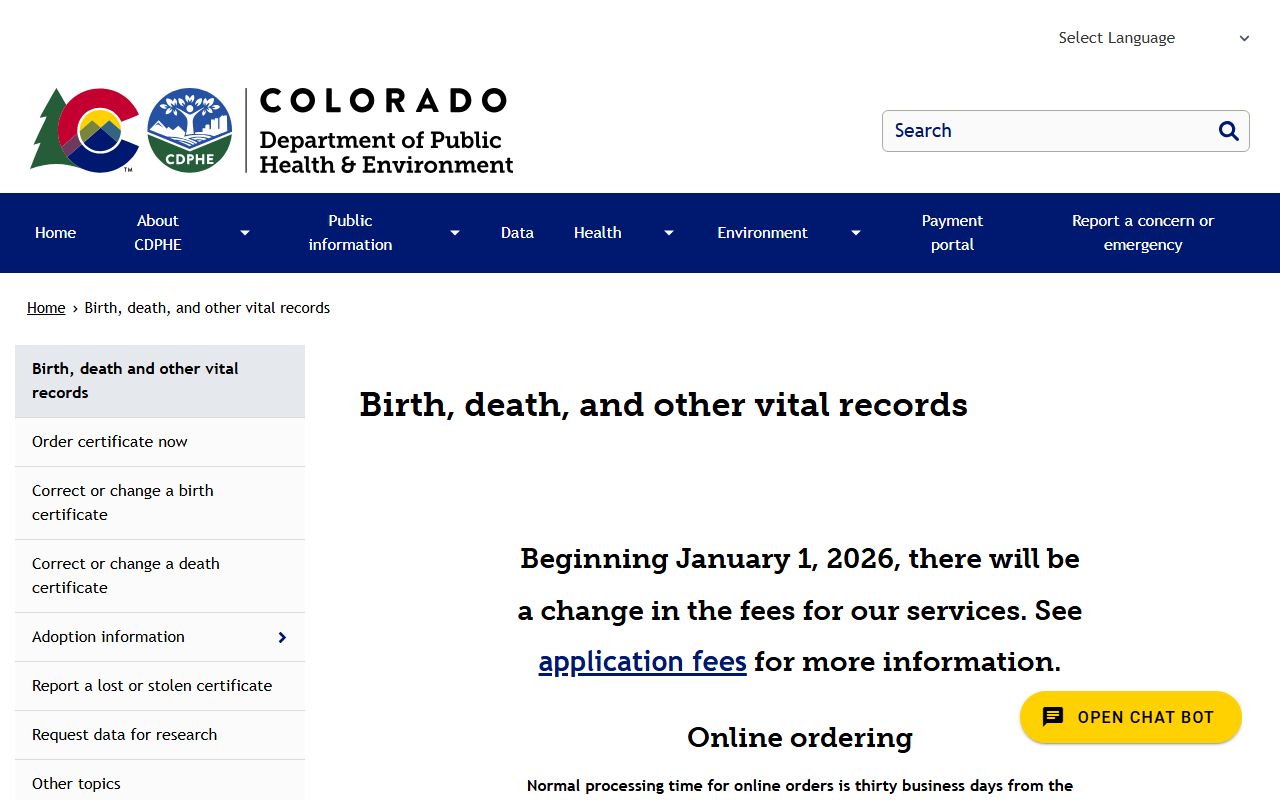
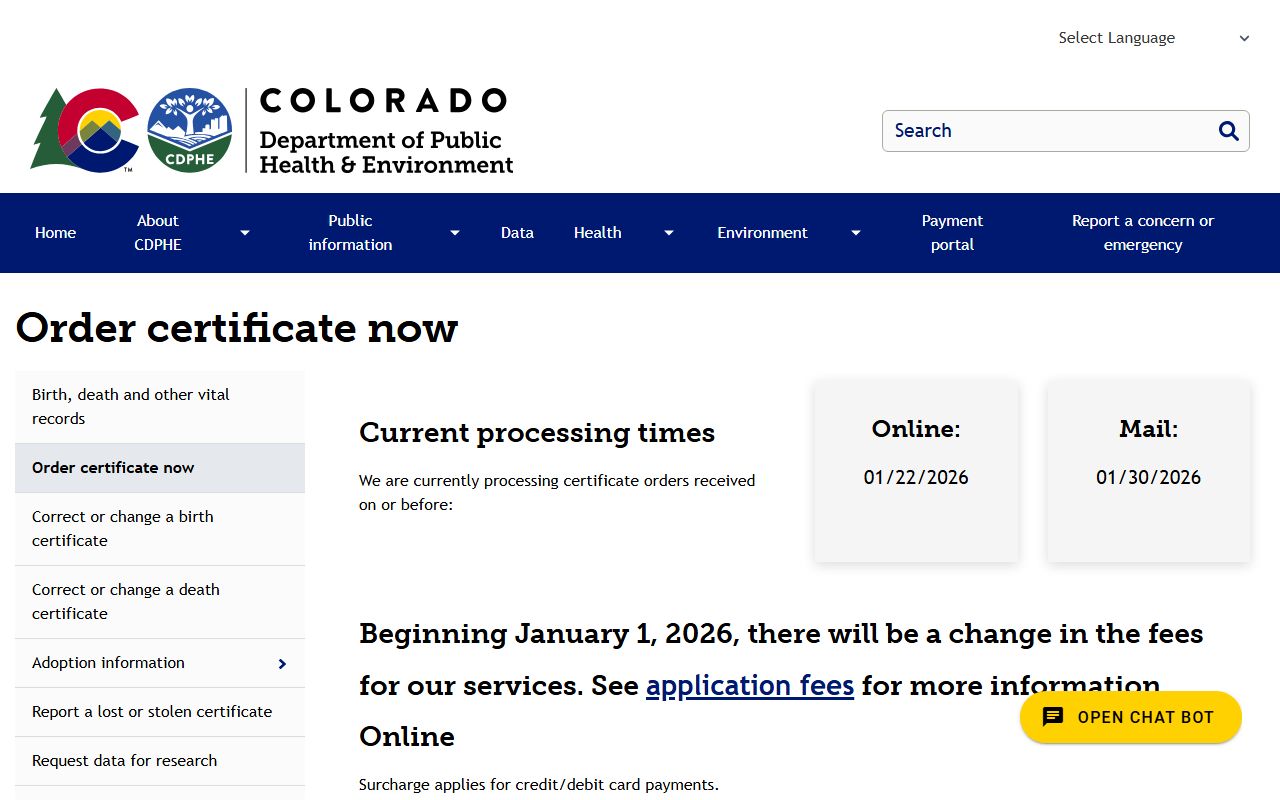
Mail orders take longer but work well for those who prefer paper forms in Colorado. Download the death certificate application from the Colorado CDPHE website. The form is also available in Spanish. Include a copy of your ID and proof that you can get the record. Mail your packet with payment to the vital records office in Denver. Processing takes about thirty business days for online orders. Mail orders for Colorado death certificates may take longer. Volume affects processing time at the state office.
Many county health departments in Colorado can issue death certificates too. This option works well if you live far from Denver. Contact your local Colorado county health office to ask if they provide this vital records service. Some counties can print death certificates the same day you visit. Others may need to order from the state. They mail them to you later. Check with your local office about their specific death record services anywhere in Colorado.
Who Can Request Colorado Death Certificates
Colorado law restricts access to death certificates for recent deaths. C.R.S. § 25-2-117 states that vital records are confidential in this state. Only certain people can get copies of death certificates less than 75 years old. The state of Colorado takes privacy seriously. Staff will check your ID and proof of relationship. They do this before releasing any death records or vital records to requesters in Colorado.
C.R.S. § 25-2-118 defines who has a direct and tangible interest in death records in Colorado. The list of eligible requesters includes specific family members. Spouses named on the Colorado death certificate may order copies. Parents listed on the record qualify too. Adult children must show a birth certificate to prove the relationship. Siblings and half-siblings can request death records with proof of a shared parent in Colorado. The person named as informant on the death certificate may also obtain copies of these vital records.
Other eligible parties include funeral homes listed on the Colorado record. Legal representatives with court papers may order copies of death certificates in Colorado. Insurance companies can get vital records if they show proof of a policy and beneficiary status. Government agencies like Social Security or Human Services can request death records for official work in Colorado. Each must present proper credentials to the Colorado vital records office. Access to these confidential death records is strictly controlled by state law.
Grandparents and grandchildren do not qualify based on relationship alone in Colorado. This rule changed in October 2024. The state of Colorado tightened access to protect privacy. Genealogists can access death records over 25 years old in the state. These copies are marked "For Genealogical Use Only." They serve research needs while maintaining some privacy controls. Colorado families benefit from these protections. Meanwhile, researchers still gain access to historic vital records from Colorado.
Note: Death records from Colorado remain confidential for 75 years from the date of death.
Denver Public Library Obituary Resources
The Denver Public Library maintains one of the best obituary collections in the state of Colorado. Their Western History and Genealogy Department has spent decades indexing death notices from Colorado papers. The collection covers Denver newspapers from 1913 to 2016. Staff created PDF indexes by year range. You can download these and search for names. This free resource helps anyone research Colorado obituary records without cost. It complements official state death records.
The library also runs the Colorado Obituary Project. This index holds about 50,000 obituaries from outside Denver in Colorado. Most date from the 1970s through 1990. These came from small town papers across the state. You can request full-text copies through the Special Collections department. The reference phone is 720-865-1821. Staff can guide you through the request process. These Colorado obituary archives add depth to official vital records.
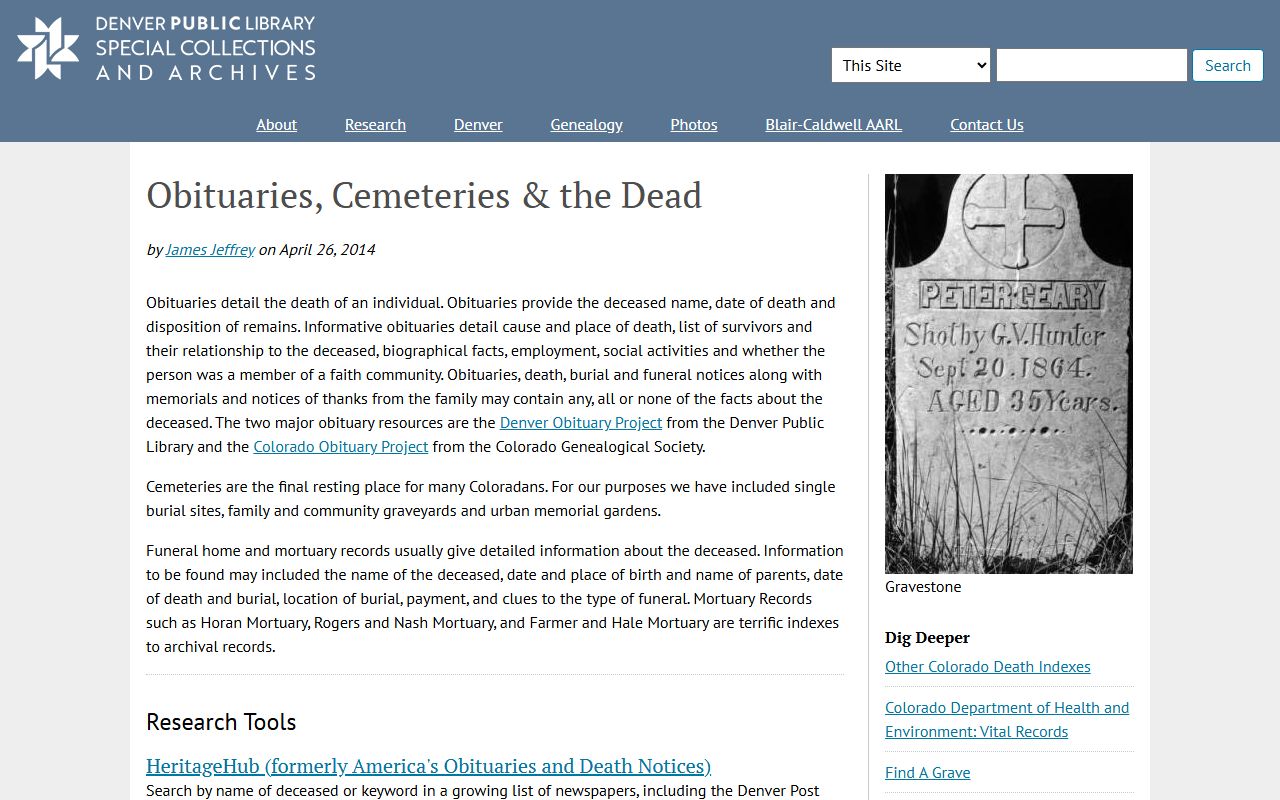
The Denver library offers access to HeritageHub for Colorado research. This database includes modern obituaries from the Denver Post and Rocky Mountain News. Coverage starts around 1990 and continues to recent years. You can search by name or keyword. This helps find recent deaths in Colorado. Some may not yet have public death certificates available. The obituary database bridges the gap while vital records remain restricted by state law.
Many specialized indexes live at the Denver library for Colorado. The Colorado Statesman Index lists African American obituaries from 1904 to 1954. The Intermountain Jewish News Obituary Index runs from 1918 to 2011. Cemetery records for Crown Hill, Fairmount, and Riverside are searchable. These niche collections serve diverse research needs. Colorado families and historians use them alongside official death records from the state.
Online Obituary Databases for Colorado
Several free and paid sites offer Colorado obituary records online. The Colorado Historic Newspapers Collection tops the list for free access. This service from the Colorado State Library holds over 7.5 million digitized pages. More than 945 newspaper titles appear in the database from across Colorado. Papers span from 1859 to 2025. New issues join the site regularly. You can search and view all content at no charge. These papers often contain obituaries and death notices that supplement vital records from Colorado.
Legacy.com aggregates current obituaries from Colorado funeral homes and newspapers. The site covers all 64 counties in the state. You can search by name or browse by city. Denver, Fort Collins, and Pueblo each have dedicated sections. This site works well for finding recent death notices in Colorado. It also lets you leave guest book messages for families. The obituaries here are more current than official death records.
Find A Grave offers free cemetery and burial records for Colorado. Users contribute photos of grave markers and burial locations in the state. GPS coordinates help you locate graves in person. The site links to family members. It offers virtual memorials. Many genealogists use this as a starting point for Colorado death research. The burial data pairs well with official state vital records from Colorado archives.
FamilySearch.org provides free guides to Colorado obituary records. Their wiki pages link to the Colorado Obituary Project and other resources. GenealogyBank offers paid access to 16,000 newspapers. Their Colorado collection spans 1980 to 2014. These paid sites may save time if you need records from many states. They complement Colorado-specific vital records and death records databases available to researchers.
Correcting Colorado Death Certificates
Errors sometimes appear on Colorado death certificates. Names may be misspelled. Dates could be wrong. Family members need these vital records corrected. The CDPHE handles amendments to death certificates in Colorado. A specific process exists for fixing mistakes on these official documents.
To correct a death certificate in Colorado, you must submit documentation. The process requires a completed correction form. You need proof of the correct information. A copy of your ID showing you are eligible to request changes. Payment of the processing fee is required. Current processing times run about thirty business days for these vital records corrections.
Common corrections include name spellings and date errors. Places of birth sometimes need updating. Marital status or spouse name corrections occur. Parent information may require changes. Each correction to Colorado death certificates needs supporting documents. Hospital records, birth certificates, or court orders serve as proof. The vital records office reviews all requests carefully.
Amendments differ from corrections on Colorado death certificates. An addition adds new information to the record. A correction fixes wrong information already there. Different forms apply for each type of change. Fees may vary based on the complexity of the amendment to these death records. Contact the Colorado vital records office for guidance on your specific situation.
Funeral directors can help with initial filing errors. They have limited time to fix mistakes after submission. Families should review death certificates quickly. Errors are easier to correct soon after filing. Waiting years complicates the amendment process for Colorado death records. Early action preserves accurate vital records for future generations.
Using Colorado Death Records for Genealogy
Genealogists rely on Colorado death records to build accurate Colorado family trees. These vital records from Colorado contain facts you cannot find elsewhere. A death certificate lists the full name of the decedent. It shows their date and place of birth. Parents' names appear, including mother's maiden name. The document states marital status and spouse's name. For Colorado researchers, these details break through brick walls in family history.
Start with the Colorado State Archives for deaths before 1908 in this state. Their collection of early records may hold gems about pioneer ancestors. Search the online indexes first. These point you to specific records in Colorado. For deaths after 1908, contact CDPHE for official death certificates. Verify dates and names using newspaper obituaries from the same time period. Cross-checking sources ensures accuracy in your Colorado family history.
Newspaper obituaries add life stories to bare facts from Colorado death certificates. Colorado papers published rich details about the deceased. You may learn about their occupation, church membership, and community roles. Survivors are listed by name and relationship. Funeral information points you to cemetery records in Colorado. These clues lead to more documents about your Colorado ancestors.
Cemetery records round out death research in Colorado. Find A Grave lists many Colorado burials with photos. Some cemetery offices in Colorado hold burial registers and plot maps. These show who is buried near your ancestor. Family members were often buried together in Colorado. Genealogical societies in the state can help locate these records. They know local sources that may not appear in online searches.
Types of Colorado Obituary and Death Records
Several kinds of obituary records and death documents exist in Colorado. Each serves a different purpose for researchers and families. Official death certificates remain the most authoritative source. These state-issued vital records contain verified facts about the death. Coroner's reports document unusual or sudden deaths. Burial records track interments at specific cemeteries. Newspaper obituaries preserve family stories and community connections. Understanding these different death record types helps you know where to search.
Official Colorado death certificates remain the gold standard for proof of death. These vital records show the decedent's full legal name. Birth dates and places appear on the form. The certificate lists parents' names and residences. Marital status and spouse identification are included. Cause of death and physician certification complete the document. State registrars sign and seal these death certificates. They serve as prima facie evidence in courts. Colorado death certificates meet legal standards nationwide.
Burial and cemetery records offer additional details. Sextons recorded burials in registers. These vital records show plot locations and grave numbers. Some include cause of death or birthplace. Cemetery transcripts preserve information from aging headstones. Funeral home records contain obituaries and service details. These death records predate state registration in many Colorado counties. Cemetery vital records fill gaps when official certificates are missing.
Newspaper obituaries preserve family narratives. These notices list survivors and their relationships. Biographical details fill out the life story. Funeral service information helps locate burial sites. Colorado papers published obituaries for over 150 years. Digital archives now make these vital records searchable. Obituary records complement official death certificates. They provide context that formal documents lack.
Coroner's records document unusual deaths in Colorado. These vital records include inquests and autopsy reports. They exist for deaths by accident, suicide, or homicide. Coroners also investigated deaths without physician attendance. These death records may contain witness statements. Evidence and photographs sometimes appear in the files. Colorado coroners maintained these records by county. The State Archives holds many historic coroner records.
Mortuary records provide another source of death information. Funeral homes created files for each service they performed. These vital records often contain obituaries submitted by families. They show payment details and service arrangements. Some include death certificate information before state filing. Funeral home records may survive when official death records are lost. These death records offer glimpses into funeral practices of the era.
County Vital Records Offices in Colorado
Colorado's 64 counties each have vital records offices. These local offices can issue death certificates for the entire state. You do not need to visit the county where the death occurred. Any Colorado county health department can provide these death records. This convenience helps families who live far from Denver.
County vital records offices follow the same rules as the state office. They charge identical fees for death certificates. First copies cost $25. Additional copies ordered at the same time cost $20 each. These offices issue certified copies with the same legal standing as those from the state. Colorado county offices provide vital records services locally.
Some Colorado counties offer same-day service for death certificates. Bring proper identification and proof of eligibility. Staff can print certified copies while you wait. This speed helps when you need death records quickly. Not all counties provide this service. Call ahead to confirm before visiting your local vital records office.
County offices also handle questions about local death records. They can guide you to historical resources in the area. Some counties maintain their own archives of older vital records. These predate state registration requirements. County clerks may have burial registers or coroner records. These death records supplement state-held documents.
Adams County, El Paso County, and Jefferson County have large vital records operations. Denver County processes many death certificates due to city hospitals. Rural counties serve smaller populations but provide the same services. All Colorado counties work within state guidelines for vital records. Contact your local office for specific hours and procedures.
Historical Colorado Death Records Before 1908
Finding death records before 1908 presents unique challenges in Colorado. The state did not require uniform death registration until that year. Records from earlier periods exist but are scattered. Some counties kept burial registers. Churches recorded deaths in their memberships. Family Bibles preserved obituary notices. These alternate sources substitute for official death certificates in Colorado.
Denver hospitals maintained early death records. These became the best collection for pre-1908 research. The Colorado State Archives preserves these documents. They include deaths that occurred in city medical facilities. Registers list patient names and dates of death. Some include causes and burial locations. These vital records help fill gaps for Denver ancestors. Researchers rely on these early Colorado death records.
County coroners kept records of unusual deaths. Inquests investigated suspicious or accidental deaths. These documents contain witness testimony. They describe circumstances surrounding the death. Colorado State Archives holds many historic coroner files. These death records offer dramatic glimpses into frontier life. They supplement standard obituary records from Colorado.
Cemetery sexton records provide burial dates. These vital records confirm deaths when other sources fail. Sextons recorded purchases of grave plots. They noted who was buried in each location. Some Colorado cemeteries have published their records. Others require direct contact with cemetery offices. These death records prove invaluable for pre-statehood research. Family historians treasure these Colorado vital records.
Newspapers published death notices throughout Colorado history. Early papers printed brief announcements. Later obituaries grew more detailed. The Colorado Historic Newspapers Collection digitizes these vital records. You can search for ancestor names across decades. Obituary records from newspapers add color to family histories. They often contain details missing from official death certificates in Colorado.
Private organizations preserve additional death records. The Daughters of the American Revolution compiled cemetery transcripts. The Works Progress Administration indexed early vital records. These collections survive at the Colorado State Archives. They provide access to death records that might otherwise be lost. Researchers should explore these resources for complete coverage of Colorado ancestors.
Legal Uses of Colorado Death Certificates
Death certificates serve many legal purposes in Colorado. Estates require these vital records for probate proceedings. Banks need death certificates to close accounts. Insurance companies use them to process claims. Government agencies verify deaths for benefit purposes. Lawyers regularly request these death records for their cases.
Certified copies carry special authority. They bear the official seal of Colorado. The registrar's signature appears on each document. Courts accept certified death certificates as proof. Uncertified copies lack this legal standing. Request certified copies when using death records for official purposes. Colorado vital records offices clearly mark certified documents.
Multiple copies often prove necessary. Each financial institution may require an original certified death certificate. Government agencies typically want their own copies. Order several death certificates when a loved one passes. This prevents delays in settling affairs. The cost of additional vital records is lower when ordered together in Colorado.
International use requires special handling. Some countries need apostille certification. This verifies that death certificates are genuine. The Colorado Secretary of State provides this service. Foreign governments accept apostilled vital records. Standard certified copies work for domestic purposes. Plan ahead when death records must cross borders.
Note: Certified Colorado death certificates remain valid indefinitely. They do not expire like some other documents.
Property transfers require death certificates. Real estate cannot change hands without proof of death. Vehicle titles need updating when owners die. Stock transfers and investment accounts follow similar rules. These transactions all depend on certified death records. Colorado vital records offices handle high volumes of requests for these purposes. The importance of accurate death certificates cannot be overstated for legal clarity in estate matters.
Social Security benefits require death notification. The agency must receive official death records to stop payments. Surviving spouse benefits depend on these death records. Colorado funeral homes often handle this notification. They file death certificates electronically with the state. This speeds processing of vital records at the federal level. Families should confirm this step occurs promptly after a death.
Military honors and veteran benefits also require death certificates. The VA needs proof of death to process claims. Burial flags and memorial services depend on these vital records. Colorado veterans' services offices assist families with obtaining needed death records. They guide survivors through the process of securing all required documents.
Life insurance claims require certified death certificates. Each policy may need an original document. Companies keep these death records for their files. Beneficiaries should order enough copies for all claims. Colorado vital records offices recommend requesting multiple death certificates at the time of need. Additional copies cost less when ordered together initially.
Employer benefits often require death documentation. Pension plans need proof of death for survivor benefits. Stock option plans and 401k accounts require similar death records. Human resources departments guide employees on requirements. Having certified copies of death certificates ready speeds these processes. Colorado employers work with families to process these claims efficiently using proper Colorado vital records.
Tax matters require death certificates too. The IRS needs notification when taxpayers die. Final tax returns need filing for the deceased. Estate taxes may apply to larger holdings. All these processes require official death records. Accountants and tax preparers ask for certified copies of these Colorado vital records. Proper documentation prevents delays in settling tax matters for Colorado estates.
Medical research sometimes uses death records. Public health studies track disease patterns. Mortality statistics help shape health policy. Colorado death records contribute to national databases. Researchers use aggregated data from these Colorado vital records. Individual privacy remains protected. The value of these death records extends beyond individual families to society as a whole.
Genealogical societies preserve and index obituary records. These volunteer organizations make death records more accessible. They publish cemetery transcripts and newspaper extracts. Colorado genealogical groups meet regularly to share research strategies. They help newcomers navigate vital records collections. Many maintain libraries of obituary records and death records for public use. These societies fill important gaps in official archives.
DNA testing complements traditional obituary records. Genetic genealogy confirms relationships suggested by death certificates. Researchers combine DNA results with vital records evidence. This two-pronged approach strengthens family trees. Colorado genealogists increasingly use both methods. Death records provide the paper trail. DNA provides the biological confirmation. Together they create robust ancestral proofs.
Online family trees should cite death records properly. Document sources for each fact about an ancestor. Include repository information for vital records. Note the certificate number when available. Quality genealogy depends on accurate source citations. Colorado death records accessed through official channels carry the most weight. These death certificates provide verifiable facts for family histories.
Mobile apps now help track obituary records research. Genealogists can access databases from anywhere. They search for Colorado death certificates while visiting cemeteries. They photograph headstones and link them to vital records. Technology brings Colorado death records research into the field. Colorado researchers benefit from these digital tools. The search for ancestral death records continues to evolve with new innovations.
Sharing obituary records helps the genealogical community. Researchers collaborate on difficult lines. They exchange copies of Colorado death certificates and vital records. Online forums connect people with shared ancestors. This cooperation breaks down brick walls. Colorado family historians participate actively in these networks. Shared death records benefit everyone researching their Colorado roots and building accurate family histories.
Preserving obituary records for future generations matters. Digitization protects fragile documents from deterioration. Backups ensure these vital records survive disasters. Colorado archives invest in preservation technology. They scan death certificates and newspaper pages. Digital copies provide access while protecting originals. This work safeguards Colorado's death records heritage, death certificates, and obituary records for Colorado descendants.
Education helps researchers use obituary records effectively. Workshops teach search strategies for vital records. Classes cover reading old handwriting on death certificates. Webinars explore online databases of death records. Colorado genealogical societies offer these learning opportunities. New researchers gain skills to find ancestral Colorado obituary records. Education empowers successful Colorado family history research with proper death records, obituary records, and vital records.
Contact Information for Colorado Death Records
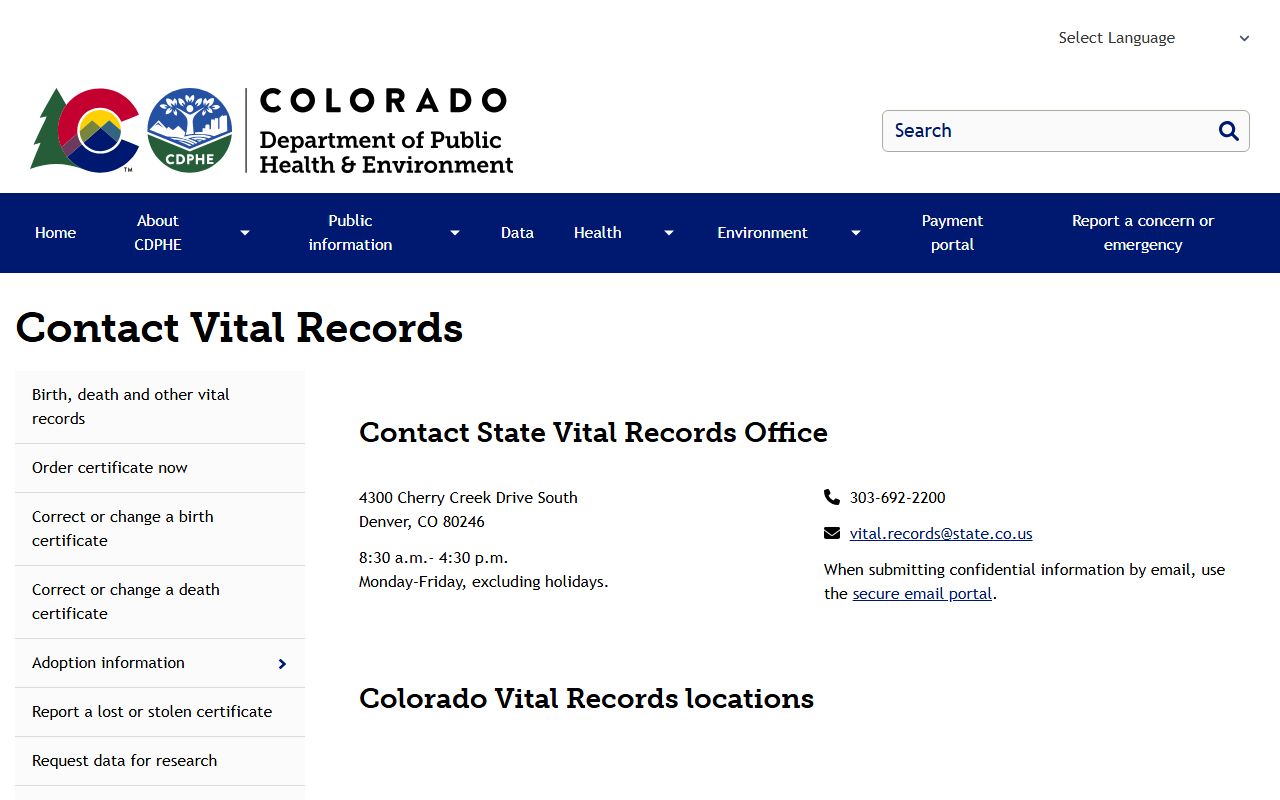
Keep these addresses and phone numbers handy for your Colorado records search. The CDPHE Vital Records Office is at 4300 Cherry Creek Drive South, Denver, CO 80246. Their phone is 303-692-2000. Email questions to vital.records@state.co.us. They also offer a secure email portal for sensitive requests in Colorado. Use this when sending copies of your ID or legal papers for death certificate orders.
The Colorado State Archives sits at 1313 Sherman St., Room 1B-20, Denver, CO 80203. Call them at 303-866-2358 for research help. Appointments are required for in-person visits. Their online search tool works around the clock for indexes of historic death records. Archivists can help locate vital records from before 1908 in Colorado.
Denver Public Library's Western History section is at 10 W. 14th Ave. Pkwy., Denver, CO 80204. Phone 720-865-1821 for reference help with Colorado obituaries. The Blair-Caldwell African American Research Library is at 2401 Welton St., Denver, CO 80205. Call 720-865-2401 for that branch. Both help with Colorado genealogy and death records research.
Browse Colorado Obituary Records by County
Each of Colorado's 64 counties maintains local death records. County health departments can often issue death certificates. County clerks may hold older vital records. Select a county below to find local contact information and resources for obituary records in Colorado.
Obituary Records in Major Colorado Cities
Major cities in Colorado have their own resources for finding obituaries and death records. Libraries, historical societies, and local newspapers maintain archives. Choose a city below to learn more about death records in that area.